Peanut
Arachis hypogaea
Peanuts are the seeds of a legume. They are crunchy and can be soft when cooked. Cooks bake, boil, simmer, deep-fry, or roast them, and blend them into a paste.
- Plant-based
- Gluten-free
- Allergen: peanuts
About the plain ingredient, not packaged products; general information, not medical advice. Details
- Category
- Beans & pulses
- Part used
- Seed
- Family
- Fabaceae
- Texture
- Crunchy, soft
- Top country
- Indonesia
- Dishes
- 30 in the catalogue
- Energy
- 588 kcal per 100 g

Photo: Ivar Leidus · CC BY-SA 4.0 · Wikimedia Commons

In the kitchen
How to use peanut
Typical ways to cook or use it
- Bake
- Boil simmer
- Deep fry
- Paste blend
- Roast
Preparing it
Soak dehydrated raw peanuts in water before boiling; an overnight soak is usual. For blister frying, soak the peanuts in water before oil roasting.
Cooking with it
Dry-roasted peanuts lose their roasted flavor faster than oil-roasted or blister-fried peanuts.
Flavour
Taste and texture
Texture, cooked
- Crunchy
- Soft
Nutrition
What 100 g of peanut holds
Protein 25%Fat 47%Carbohydrate 28%of the macronutrients by weight
| Energy | 588 kcal · 2,374 kJ |
|---|---|
| Protein | 23 g |
| Fat | 43 g |
| of which saturated | 6.3 g |
| Carbohydrate | 26 g |
| of which sugars | 4.7 g |
| Fibre | 8 g |
| Sodium | 1.5 mg |
| Cholesterol | 0 mg |
| Potassium | 636 mg |
|---|---|
| Calcium | 49 mg |
| Iron | 1.6 mg |
| Magnesium | 180 mg |
| Zinc | 2.8 mg |
| Folate | 240 µg |
Cooked
Protein 30%Fat 52%Carbohydrate 18%of the macronutrients by weight
| Energy | 579 kcal · 2,423 kJ |
|---|---|
| Protein | 28 g |
| Fat | 49 g |
| of which saturated | 7.6 g |
| Carbohydrate | 17 g |
| Fibre | 8.9 g |
| Sodium | 6 mg |
| Cholesterol | 0 mg |
| Potassium | 776 mg |
|---|---|
| Calcium | 100 mg |
| Iron | 2.3 mg |
| Magnesium | 168 mg |
| Zinc | 2 mg |
| Folate | 126 µg |
Source: USDA FoodData Central (foods 172430, 2515376, 173807), public domain. Minerals and vitamins are listed only where USDA measured a non-zero amount.
Around the world
Where peanut is cooked
Countries whose dishes use it most
- Indonesia 21
- Nigeria 2
- Cambodia 1
- Madagascar 1
- Mozambique 1
Counts are catalogued dishes from each country that list peanut among their ingredients.
Origins
- Native to
- South America
The 1800s · Spain and Europe
Peanut cultivation reached Europe through Spain during the 19th century.
The 1800s · Northern America
Peanuts were sold at fairs and from pushcarts in North America during the 19th century.
On the table
Dishes made with peanut
Coto makassar
Indonesia
Bok l'hong
Cambodia
Kuli-kuli
Nigeria
Koba (sweet)
Madagascar
Matapa
Mozambique
Caluk noodles
Indonesia
Bobozee
Nigeria
Matang satay
Indonesia
Asinan Bogor
Indonesia
Rujak soto
Indonesia
Dengke Mas Naniura
Indonesia
Lotek
Indonesia
Rujak cingur
Indonesia
Spicy porridge
Indonesia
Karedok
Indonesia
Sayur asem
Indonesia
Lalat satay
Indonesia
Rujak manis
Indonesia
Satay kalong
Indonesia
Rempeyek
Indonesia
Rabbit satay
Indonesia
Bulayak satay
Indonesia
Tegal satay
Indonesia
Sate madura
Indonesia
Ampyang
Indonesia
Ponorogo satay
Jagung bose
Boli
Peanuts and Coke
Dish lists come from Wikidata; a dish counts when its recorded ingredients include peanut.
Good to know
Diet and allergens: peanut in detail
- Allergens
- Contains: peanutsChecked and not found: soy, eggs, fish, milk, lupin, wheat, celery, sesame, mustard, molluscs, sulphites, tree nuts, crustaceans, gluten cereals.
- Animal origin
- No animal ingredients foundChecked and not found: egg, fish, meat, dairy, honey, insect, gelatin, poultry, bone char, shellfish, other animal, animal fining, animal rennet.
- Gluten
- None
- Alcohol
- None
- Caffeine
- None
- Pork
- None
Family
Related forms
- Made from it
- peanut butter (ground, roasted), peanut oil
Cooked together
Often cooked with peanut
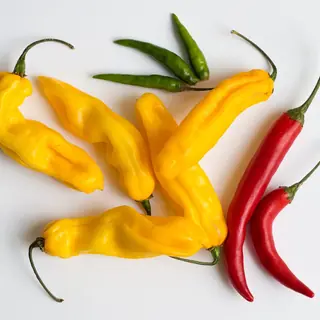
Chili pepper
15 shared dishes
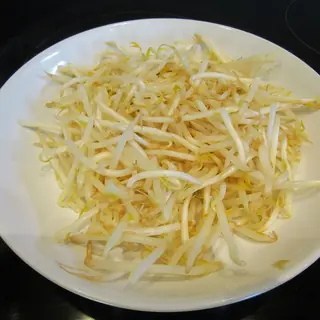
Mung bean sprout
5 shared dishes
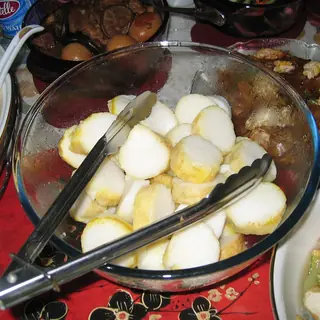
Lontong
4 shared dishes
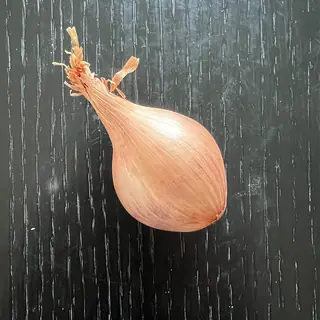
Shallot
13 shared dishes
Kecap manis
5 shared dishes
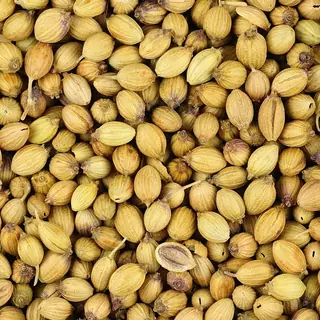
Coriander seed
7 shared dishes
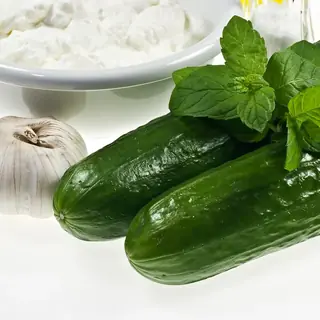
Cucumber
5 shared dishes
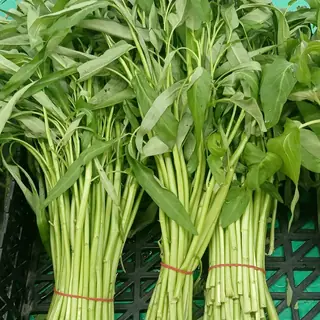
Water spinach
3 shared dishes
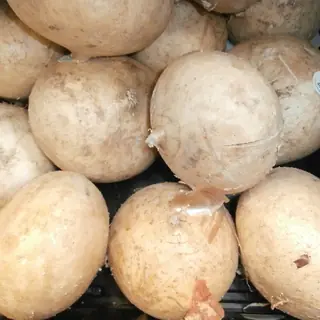
Jicama
2 shared dishes
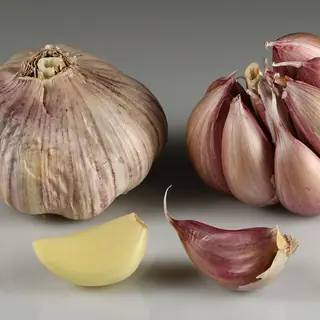
Garlic
15 shared dishes
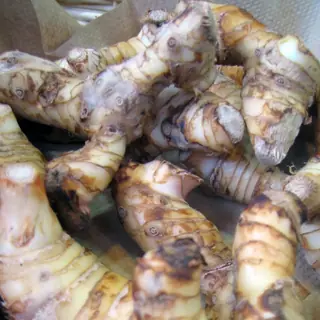
Galangal
8 shared dishes
Photo credits for this page (10)
Chili pepper: Takeaway · CC BY-SA 4.0 · Wikimedia Commons
Mung bean sprout: Kolforn · CC BY-SA 4.0 · Wikimedia Commons
Shallot: HaJunkiyada · CC BY-SA 4.0 · Wikimedia Commons
Coriander seed: Sanjay Acharya · CC BY-SA 4.0 · Wikimedia Commons
Cucumber: Nikodem Nijaki · CC BY-SA 3.0 · Wikimedia Commons
Water spinach: Fumikas Sagisavas · CC0 1.0 · Wikimedia Commons
Jicama: Jeffery Martin · CC0 1.0 · Wikimedia Commons
Garlic: Ivar Leidus · CC BY-SA 4.0 · Wikimedia Commons
Galangal: Ruth Hartnup from Vancouver, Canada · CC BY 2.0 · Wikimedia Commons


Around the world
What peanut is called
Spanish
maní
French
cacahuète
Italian
arachide · nocciolina americana · spagnolette · nocciolina
German
Erdnuss · Erdnüsse
Dutch
pinda · pindanoot · pinda's · aardnoot
Russian
арахис · орех арахиса · арахисовое зёрнышко
Polish
orzech arachidowy · fistaszek · orzech ziemny
Hebrew
בוטן
Tamil
நிலக்கடலை
Chinese
花生 · 长生果 · 花生米
Japanese
ピーナッツ · 南京豆 · ナンキンマメ · 落花生
Korean
땅콩
Show all 58 languages
Aymara
chuqupa
Azerbaijani
araxis
Basque
kakahuete
Belarusian (Taraskievica orthography)
арахіс
Brazilian Portuguese
amendoim
Burmese
မြေပဲစေ့ · မြေပဲဆံ
Catalan
cacauet
Cebuano
mani
Czech
arašíd · burák
Danish
jordnød
Esperanto
ternukso
Estonian
maapähkel
Finnish
maapähkinä
Georgian
არაქისი
Guarani
manduvi
Gujarati
મગફળી
Hakka Chinese
thì-thèu
Hausa
gyaɗa
Hungarian
földimogyoró
Indonesian
kacang tanah
Interlingua
cacahuete
Irish
pis talún · pis thalún · cnó talún
Kurdish
fistiqa axê
Latvian
zemesrieksts
Lingala
ngúba
Malagasy
voanjo · pisitasy
Malay
kacang tanah
Marathi
भुईमूग
Min Nan Chinese
thô͘-tāu
Min Nan Chinese (Traditional)
土豆
Navajo
neeshchʼííłbáhí
Norwegian Bokmål
peanøtt
Serbian
кикирики
Shan
ထူဝ်ႇလိၼ် · မဵတ်ႉထူဝ်ႇလိၼ် · သၢၼ်ထူဝ်ႇလိၼ်
Shona
nzungu
Sicilian
calacavisi
Simplified Chinese
花生
Slovenian
arašid · zemeljski orešek · kikiriki
Swahili
karanga
Swedish
jordnöt · jordnötter
Tatar
җир чикләвеге
Tatar (Cyrillic)
җир чикләвеге
Thai
ถั่วลิสง
Traditional Chinese
花生
Traditional Chinese (Taiwan)
花生
Ukrainian
арахіс
Uzbek
yeryongʻoq
Venetian
bajijo · bagìgio
Western Mari
кӹдӓлӓн пӱкш
Yiddish
סטאַשקע
Zhuang
duhdoem
Sources and credits
Data
- GlobeCooks editorial: descriptions, kitchen notes and classification, written by GlobeCooks from checked sources
- USDA FoodData Central (Foundation, SR Legacy): nutrition values (Public domain (US government work, CC0))
- Wikidata: names, classification and dishes (CC0 1.0)
- Wikimedia Commons: photos
- Wikipedia (English) (CC BY-SA 4.0)
Wikidata item: Q3621199
Photos
Photo: Ivar Leidus · CC BY-SA 4.0 · Wikimedia Commons