Jicama
Pachyrhizus erosusAlso called Mexican yam bean, Mexican turnip and pachyrhizus erosus
Jicama is a crisp root used as a vegetable. Cooks eat it raw or use it in stir-fries, pairing it with ingredients such as lime, cilantro, ginger, and soy sauce.
- Plant-based
- Gluten-free
- No listed allergens
About the plain ingredient, not packaged products; general information, not medical advice. Details
- Category
- Vegetables
- Part used
- Root
- Family
- Fabaceae
- Texture
- Crisp
- Cooked most in
- Asia
- Top country
- Indonesia
- Dishes
- 4 in the catalogue

Photo: Jeffery Martin · CC0 1.0 · Wikimedia Commons

In the kitchen
How to use jicama
Flavour
Taste and texture
Texture
- Crisp
Shopping
Choosing and storing jicama
Keeping it
- Fridge · whole
- Fridge · cut
Around the world
Where jicama is cooked
On the table
Dishes made with jicama
Asinan Bogor
Indonesia
Rujak kuah pindang
Indonesia
Karedok
Indonesia
Es buah
Indonesia
Dish lists come from Wikidata; a dish counts when its recorded ingredients include jicama.
Good to know
Diet and allergens: jicama in detail
- Allergens
- None of the 15 listed allergens foundChecked and not found: soy, eggs, fish, milk, lupin, wheat, celery, sesame, mustard, peanuts, molluscs, sulphites, tree nuts, crustaceans, gluten cereals.
- Animal origin
- No animal ingredients foundChecked and not found: egg, fish, meat, dairy, honey, insect, gelatin, poultry, bone char, shellfish, other animal, animal fining, animal rennet.
- Gluten
- None
- Alcohol
- None
- Caffeine
- None
- Pork
- None
Cooked together
Often cooked with jicama
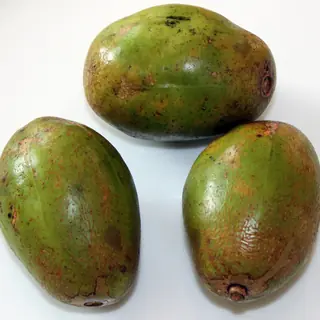
Ambarella
2 shared dishes
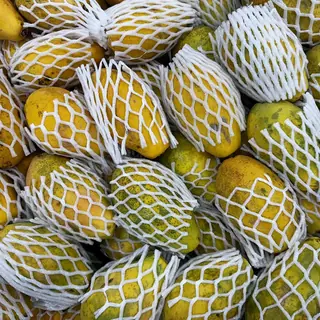
Papaya
3 shared dishes
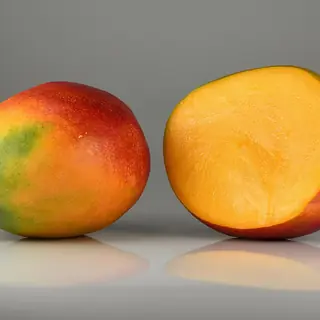
Mango
2 shared dishes
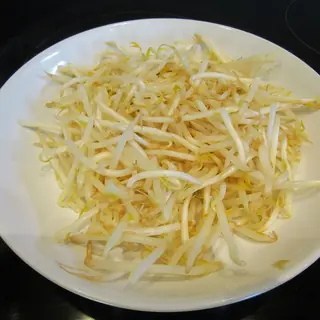
Mung bean sprout
2 shared dishes
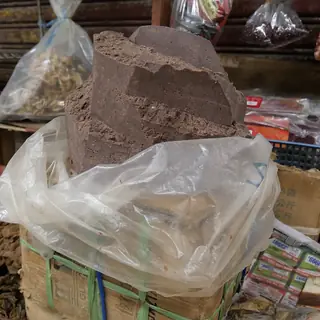
Shrimp paste
2 shared dishes
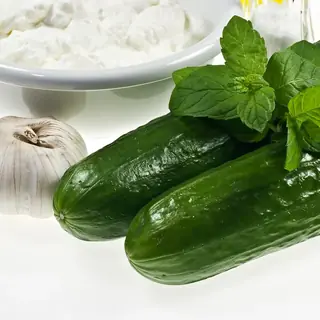
Cucumber
2 shared dishes
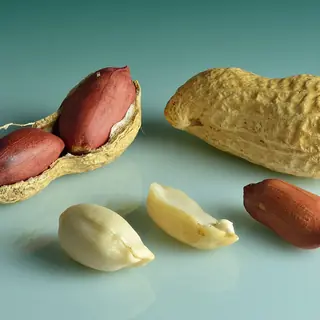
Peanut
2 shared dishes
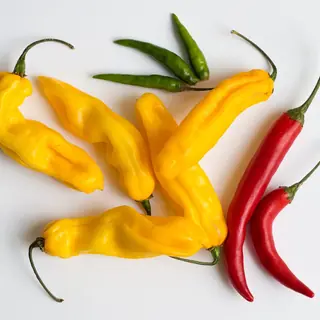
Chili pepper
3 shared dishes
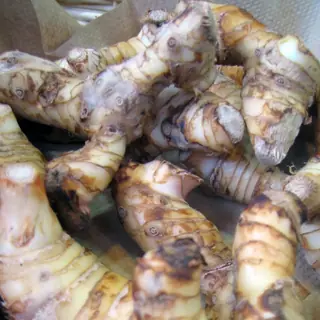
Galangal
2 shared dishes
Sugar
2 shared dishes
Table salt
2 shared dishes
Photo credits for this page (11)
Mango: Ivar Leidus · CC BY-SA 4.0 · Wikimedia Commons
Mung bean sprout: Kolforn · CC BY-SA 4.0 · Wikimedia Commons
Shrimp paste: Peachyeung316 · CC BY-SA 4.0 · Wikimedia Commons
Cucumber: Nikodem Nijaki · CC BY-SA 3.0 · Wikimedia Commons
Peanut: Ivar Leidus · CC BY-SA 4.0 · Wikimedia Commons
Chili pepper: Takeaway · CC BY-SA 4.0 · Wikimedia Commons
Galangal: Ruth Hartnup from Vancouver, Canada · CC BY 2.0 · Wikimedia Commons
Sugar: Lauri Andler (Phantom) · CC BY-SA 3.0 · Wikimedia Commons
Table salt: Dubravko Sorić SoraZG on Flickr · CC BY 2.0 · Wikimedia Commons


Around the world
What jicama is called
Spanish
Pachyrhizus erosus · jícama · síncama
French
Pachyrhizus erosus
Italian
Pachyrhizus erosus
Portuguese
Pachyrhizus erosus
German
Yambohne · Pachyrhizus erosus
Dutch
Yamboon
Turkish
Jikama
Russian
Хикама
Polish
Kłębian kątowaty
Arabic
هيكاما
Persian
جیکاما
Chinese
凉薯 · 凉瓜 · 地瓜 · 沙葛
Show all 61 languages
Albanian
Pachyrhizus erosus
Aragonese
Pachyrhizus erosus
Asturian
Pachyrhizus erosus
Balinese
Bangkuang
Basque
Pachyrhizus erosus
Bikol
Singkamas
Brazilian Portuguese
Pachyrhizus erosus
Bulgarian
Pachyrhizus erosus
Burmese
ပဲစိမ်းစားပင်
Cantonese
沙葛
Catalan
Jícama
Cebuano
Singkamas
Czech
Pachyrhizus erosus · Cacara erosa · Pachyrhizus angulatus · Pachyrhizus bulbosus
Egyptian Arabic
هيكاما
Esperanto
Jikamo
Estonian
Söödav ubajuur
Extremaduran
Pachyrhizus erosus
Filipino
Singkamas
Finnish
pikkujamssipapu
Galician
Pachyrhizus erosus
Iban
Engkuang
Ido
Pachyrhizus erosus
Indonesian
Bengkuang
Interlingua
Pachyrhizus erosus
Interlingue
Pachyrhizus erosus
Irish
Pachyrhizus erosus
Japanese
ヒカマ
Javanese
Bengkowang
Korean
콩감자 · 히카마
Latin
Pachyrhizus erosus
Lithuanian
Ropinė gumbapupė
Madurese
Bito'
Malay
Pachyrhizus erosus
Minangkabau
Bingkuang
Moroccan Arabic
الهيكاما
nah
Xīcamatl
Nepali
भुइँस्याउ
Occitan
Pachyrhizus erosus
Pampanga
Singkamas
Quechua
Mishiku hikama
Romanian
Pachyrhizus erosus
Shan
တူၼ်ႈထူဝ်ႇၵိၼ်ႁူဝ်
Simplified Chinese (China)
凉薯
Sundanese
Bangkuang
Swedish
Pachyrhizus erosus
Thai
มันแกว
Traditional Chinese (Taiwan)
豆薯
Ukrainian
Pachyrhizus erosus
Vietnamese
Cây củ đậu
Volapük
Pachyrhizus erosus
Waray
Pachyrhizus erosus
Yiddish
היקעמע
Sources and credits
Data
- GlobeCooks editorial: descriptions, kitchen notes and classification, written by GlobeCooks from checked sources
- Wikidata: names, classification and dishes (CC0 1.0)
- Wikimedia Commons: photos
- Wikipedia (English) (CC BY-SA 4.0)
Wikidata item: Q517283
Photos
Photo: Jeffery Martin · CC0 1.0 · Wikimedia Commons