Lard
Lard is rendered pig fat. Cooks use it for baking, deep-frying, stir-frying, and preserving food. It pairs with bread, rice, and soy sauce.
- Category
- Fats & oils
- Made from
- Pig fat
- Part used
- Fat
- Cooked most in
- The Americas, Europe
- Top country
- Mexico
- Dishes
- 8 in the catalogue
- Energy
- 902 kcal per 100 g

Photo: Ssemmanda will · CC BY-SA 4.0 · Wikimedia Commons

In the kitchen
How to use lard
Nutrition
What 100 g of lard holds
Protein 0%Fat 100%Carbohydrate 0%of the macronutrients by weight
| Energy | 902 kcal · 3,774 kJ |
|---|---|
| Protein | 0 g |
| Fat | 100 g |
| of which saturated | 39 g |
| Carbohydrate | 0 g |
| of which sugars | 0 g |
| Fibre | 0 g |
| Sodium | 0 mg |
| Cholesterol | 95 mg |
| Zinc | 0.11 mg |
|---|
Source: USDA FoodData Central (food 171401), public domain. Minerals and vitamins are listed only where USDA measured a non-zero amount.
Around the world
Where lard is cooked
Dishes by continent
Countries whose dishes use it most
Counts are catalogued dishes from each country that list lard among their ingredients.
Origins
The 1800s · Americas and Europe
During the 1800s, lard was used much like butter in North America and many European countries.
On the table
Dishes made with lard
Batiburrillo
Paraguay
Bayrisch Kraut
Germany
Kotlet schabowy
Poland
Refried beans
Mexico
Mertoxe
Kolbulle
Dish lists come from Wikidata; a dish counts when its recorded ingredients include lard.
Family
Related forms
- Made from
- pig fat (rendered)
Cooked together
Often cooked with lard
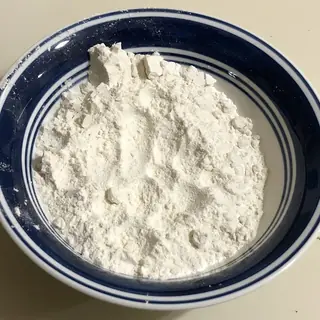
Flour
4 shared dishes
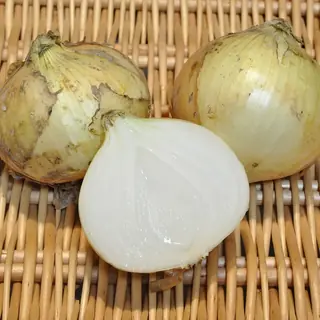
Onion
3 shared dishes
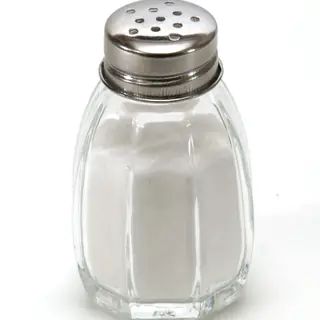
Table salt
3 shared dishes
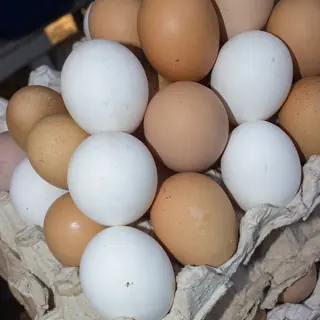
Egg
2 shared dishes
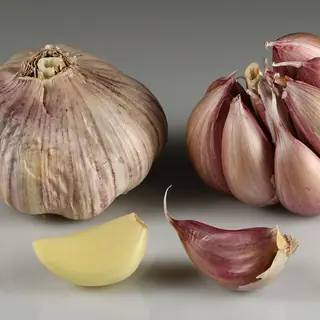
Garlic
2 shared dishes
Photo credits for this page (5)
Flour: Famartin · CC BY-SA 4.0 · Wikimedia Commons
Table salt: Dubravko Sorić SoraZG on Flickr · CC BY 2.0 · Wikimedia Commons
Egg: Flixtey · CC BY-SA 4.0 · Wikimedia Commons
Garlic: Ivar Leidus · CC BY-SA 4.0 · Wikimedia Commons


Around the world
What lard is called
Spanish
manteca de cerdo · unto de cerdo
French
saindoux · Adeps suillus
Italian
strutto · sugna
Portuguese
banha · gordura de porco · banha de porco
German
Schweineschmalz · Schmer · Schweinsschmalz · Fettbemme
Dutch
reuzel · smout
Greek
λαρδί
Turkish
domuz yağı
Russian
смалец · лярд
Polish
smalec
Arabic
دهن الخنزير
Persian
چربی خوک
Show all 62 languages
Albanian
sallo · ushuj · tlyen
Aragonese
redetiu
Asturian
mantega de gochu
Basque
txerri-gantz
Bavarian
Schmoiz
Belarusian
шмалец · лярд
Belarusian (Taraskievica orthography)
шмалец
Bulgarian
свинска мас
Cantonese
豬油
Catalan
saïm · Llard · Llard de porc
Chinese
豬油 · 彘油
Chuvash
смалец
Croatian
svinjska mast
Czech
sádlo
Danish
svinefedt
eml
Strótt
Esperanto
ŝmalco
Filipino
untosinsal
Finnish
silava
Galician
manteiga de porco
Hebrew
שומן חזיר
Hungarian
disznózsír
Ido
saimo
Igbo
Ihe omuma di nma
Indonesian
lemak babi · minyak babi
Irish
blonag
Japanese
ラード · 背脂 · 豚脂 · ラルド
Javanese
lemak babi
Korean
라드 · 라드 (기름)
Latvian
cūku tauki
Literary Chinese
豬油
Luxembourgish
Schmalz
Macedonian
свинска маст
nah
coyamechiyāhuacāyōtl
Norwegian Bokmål
smult
Norwegian Nynorsk
smult
Pennsylvania German
Schmals · Schmalz
Romanian
untură · untură de porc
Samogitian
taukā
Scottish Gaelic
blonag
Serbian
svinjska mast
Serbian (Latin)
svinjska mast
Shan
မၼ်းမူ
Sicilian
nzunza
Silesian
tuste
Simplified Chinese
猪油
Slovenian
svinjska mast
Swedish
ister · Adeps suillus · Axungia porci · Adeps benzoatus
Thai
มันหมู
Ukrainian
смалець · лярд
Vietnamese
mỡ lợn
Walloon
saeyén
Sources and credits
Data
- GlobeCooks editorial: descriptions, kitchen notes and classification, written by GlobeCooks from checked sources
- USDA FoodData Central (Foundation, SR Legacy): nutrition values (Public domain (US government work, CC0))
- Wikidata: names, classification and dishes (CC0 1.0)
- Wikimedia Commons: photos
- Wikipedia (English) (CC BY-SA 4.0)
Wikidata item: Q72827
Photos
Photo: Ssemmanda will · CC BY-SA 4.0 · Wikimedia Commons