Eggplant
Solanum melongenaAlso called aubergine, eggfruit and mad apple
Eggplant is a fruit that cooks treat as a vegetable. It has a spongy texture, tastes bitter when raw, and becomes tender when cooked. Cooks bake, grill, roast, or stuff it, and pair it with turmeric or cinnamon.
- Plant-based
- Gluten-free
- No listed allergens
About the plain ingredient, not packaged products; general information, not medical advice. Details
- Category
- Vegetables
- Part used
- Fruit
- Family
- Solanaceae
- Texture
- Spongy, tender
- Top country
- Indonesia
- Dishes
- 11 in the catalogue
- Energy
- 26 kcal per 100 g


In the kitchen
How to use eggplant
Typical ways to cook or use it
- Bake
- Braise
- Deep fry
- Grill
- Paste blend
- Pickle
- Preserve
- Roast
- Shallow fry
- Steam
- Stew
- Stir fry
- Stuff
Preparing it
Remove the green calyx before cooking. The skin and seeds are edible, so peeling and deseeding are unnecessary. Rinse, drain and salt slices before cooking to potentially reduce bitterness.
Cooking with it
The flesh absorbs cooking fats and sauces.
Flavour
Taste and texture
Taste, raw profile of eggplant
Texture
- Spongy
Texture, cooked
- Tender
Shopping
Choosing and storing eggplant
Choosing a good one
For Iranian cooking, look for an eggplant that is long, straight, firm and black.
Nutrition
What 100 g of eggplant holds
Protein 13%Fat 2%Carbohydrate 85%of the macronutrients by weight
| Energy | 26 kcal · 104 kJ |
|---|---|
| Protein | 0.85 g |
| Fat | 0.12 g |
| of which saturated | 0.03 g |
| Carbohydrate | 5.4 g |
| of which sugars | 2.4 g |
| Fibre | 2.4 g |
| Sodium | 0.44 mg |
| Cholesterol | 0 mg |
| Potassium | 222 mg |
|---|---|
| Calcium | 11 mg |
| Magnesium | 14 mg |
| Zinc | 0.12 mg |
| Vitamin C | 0.8 mg |
| Vitamin A (RAE) | 1 µg |
| Folate | 20 µg |
Source: USDA FoodData Central (foods 169228, 2685577), public domain. Minerals and vitamins are listed only where USDA measured a non-zero amount.
Around the world
Where eggplant is cooked
Countries whose dishes use it most
Counts are catalogued dishes from each country that list eggplant among their ingredients.
Origins
The 700s · Spain
Eggplant reached Muslim Spain in the 8th century.
The 1000s · Greece
Eggplant entered Byzantine Greek cooking in the late 11th century.
On the table
Dishes made with eggplant
Kuwah Pliëk U
Indonesia
Kashk e badamjan
Iran
Poqui poqui
Philippines
Bāṭarsh
Syria
Karnıyarık
Türkiye
Kumspî
Dahi baigana
India
Mderbel
Morocco
Beberuk terong
Indonesia
Jruek Drien
Indonesia
Eggplant rolls
Dish lists come from Wikidata; a dish counts when its recorded ingredients include eggplant.
Good to know
Diet and allergens: eggplant in detail
- Allergens
- None of the 15 listed allergens foundChecked and not found: soy, eggs, fish, milk, lupin, wheat, celery, sesame, mustard, peanuts, molluscs, sulphites, tree nuts, crustaceans, gluten cereals.
- Animal origin
- No animal ingredients foundChecked and not found: egg, fish, meat, dairy, honey, insect, gelatin, poultry, bone char, shellfish, other animal, animal fining, animal rennet.
- Gluten
- None
- Alcohol
- None
- Caffeine
- None
- Pork
- None
Cooked together
Often cooked with eggplant
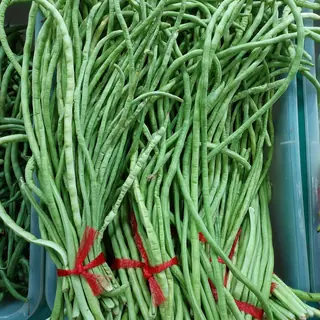
Asparagus bean
3 shared dishes
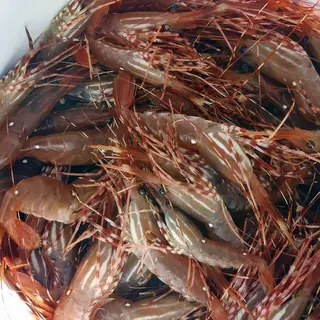
Shrimp
2 shared dishes
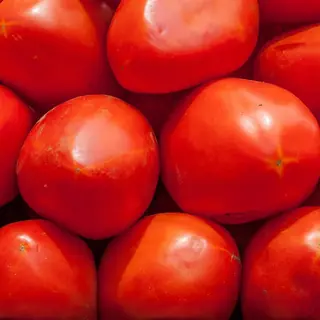
Tomato
2 shared dishes
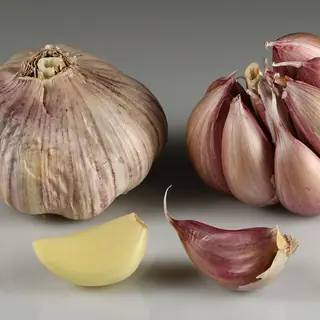
Garlic
4 shared dishes
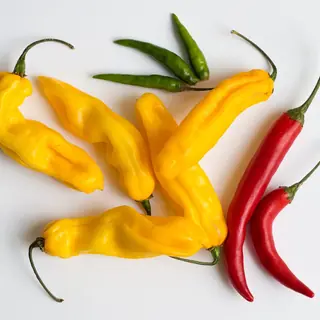
Chili pepper
2 shared dishes
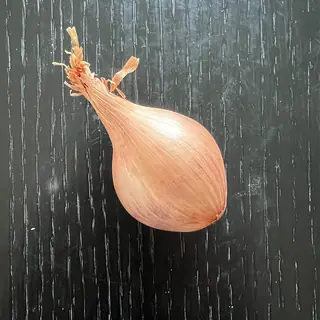
Shallot
2 shared dishes
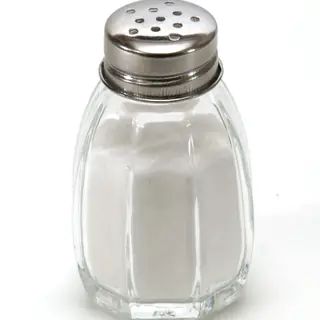
Table salt
3 shared dishes
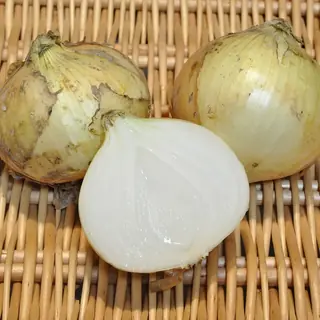
Onion
2 shared dishes
Photo credits for this page (8)
Asparagus bean: Vis M · CC BY-SA 4.0 · Wikimedia Commons
Shrimp: Gillfoto · CC BY-SA 4.0 · Wikimedia Commons
Garlic: Ivar Leidus · CC BY-SA 4.0 · Wikimedia Commons
Chili pepper: Takeaway · CC BY-SA 4.0 · Wikimedia Commons
Shallot: HaJunkiyada · CC BY-SA 4.0 · Wikimedia Commons
Table salt: Dubravko Sorić SoraZG on Flickr · CC BY 2.0 · Wikimedia Commons


Around the world
What eggplant is called
Spanish
berenjena
French
aubergine
Italian
melanzana
German
Aubergine
Dutch
aubergine
Russian
баклажан
Polish
bakłażan
Arabic
باذنجان
Hebrew
חציל
Bangla
বেগুন
Chinese
茄子
Japanese
ナス · 茄子
Show all 42 languages
Austrian German
Melanzani
Basque
alberjinia · berenjena
Belarusian (Taraskievica orthography)
баклажан
Breton
berjinez
Burmese
ခရမ်းသီး
Catalan
albergínia · albergina · esbergínia · aubergínia
Central Dusun
bintorung
Czech
lilek · baklažán
Danish
aubergine
Egyptian Arabic
بتنجان
Esperanto
melongeno
Galician
berenxena
Hungarian
padlizsán
Indonesian
terung
Irish
ubhthoradh
Kazakh
баклажан
Kurdish
bacanreşk
Kurdish (Latin)
bacanreşk
Latvian
baklažāns
Luxembourgish
Aubergine
Malay
terung
Malayalam
വഴുതന · ബ്രിഞ്ജാൾ · ഓബർജിൻ · എഗ്ഗ് പ്ലാന്റ്
Moroccan Arabic
دنجال
Norwegian Bokmål
aubergine
Romanian
vânătă
Shan
မၢၵ်ႇၶိူဝ်
Simplified Chinese
茄子
Simplified Chinese (China)
茄子
Slovenian
jajčevec · melancan · melancana
Swedish
aubergine · äggplanta
Tatar
битенгән
Tatar (Cyrillic)
битенгән
Traditional Chinese
茄子
Ukrainian
баклажан
Uyghur
Çeyze
Wolof
batanse
Sources and credits
Data
- GlobeCooks editorial: descriptions, kitchen notes and classification, written by GlobeCooks from checked sources
- USDA FoodData Central (Foundation, SR Legacy): nutrition values (Public domain (US government work, CC0))
- Wikidata: names, classification and dishes (CC0 1.0)
- Wikimedia Commons: photos
- Wikipedia (English) (CC BY-SA 4.0)
Wikidata item: Q12533094