Fig
Ficus carica
Figs are fruits with a soft texture when raw. They can be eaten raw or made into preserves, and are also sold dried.
- Plant-based
- Gluten-free
- No listed allergens
About the plain ingredient, not packaged products; general information, not medical advice. Details
- Category
- Fruit
- Part used
- Fruit
- Family
- Moraceae
- Texture
- Soft
- Cooked most in
- Europe
- Top country
- Italy
- Dishes
- 1 in the catalogue
- Energy
- 74 kcal per 100 g

Photo: BenAveling · CC BY-SA 3.0 · Wikimedia Commons

In the kitchen
How to use fig
Typical ways to cook or use it
- Preserve
- Raw
Flavour
Taste and texture
Texture, raw
- Soft
Shopping
Choosing and storing fig
In season · Northern hemisphere
- Janout of season
- Febout of season
- Marout of season
- Aprout of season
- Mayout of season
- Junout of season
- Julout of season
- Augin season
- Sepin season
- Octin season
- Novout of season
- Decout of season
In seasonPeak
Choosing a good one
Choose plump, soft figs without bruises or splits. Avoid sour-smelling figs; they are overripe.
- Sold as
- Dried
Nutrition
What 100 g of fig holds
Protein 4%Fat 1%Carbohydrate 95%of the macronutrients by weight
| Energy | 74 kcal · 310 kJ |
|---|---|
| Protein | 0.75 g |
| Fat | 0.3 g |
| of which saturated | 0.06 g |
| Carbohydrate | 19 g |
| of which sugars | 16 g |
| Fibre | 2.9 g |
| Sodium | 1 mg |
| Cholesterol | 0 mg |
| Potassium | 232 mg |
|---|---|
| Calcium | 35 mg |
| Iron | 0.37 mg |
| Magnesium | 17 mg |
| Zinc | 0.15 mg |
| Vitamin C | 2 mg |
| Vitamin A (RAE) | 7 µg |
| Folate | 6 µg |
Source: USDA FoodData Central (food 173021), public domain. Minerals and vitamins are listed only where USDA measured a non-zero amount.
Around the world
Where fig is cooked
Dishes by continent
Countries whose dishes use it most
Counts are catalogued dishes from each country that list fig among their ingredients.
Origins
- Native to
- Western Asia, Southern Asia
The 1400s · Northern Europe and Americas
Fig cultivation reached Northern Europe and the Americas from the 15th century onward.
1769 · United States
Spanish missionaries brought figs to California.
1880 · United States
G. P. Rixford brought Smyrna figs to California.
Good to know
Diet and allergens: fig in detail
- Allergens
- None of the 15 listed allergens foundChecked and not found: soy, eggs, fish, milk, lupin, wheat, celery, sesame, mustard, peanuts, molluscs, sulphites, tree nuts, crustaceans, gluten cereals.
- Animal origin
- No animal ingredients foundChecked and not found: egg, fish, meat, dairy, honey, insect, gelatin, poultry, bone char, shellfish, other animal, animal fining, animal rennet.
- Gluten
- None
- Alcohol
- None
- Caffeine
- None
- Pork
- None
Cooked together
Often cooked with fig
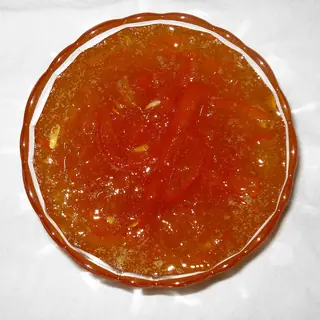
Marmalade
1 shared dish

Chocolate
1 shared dish
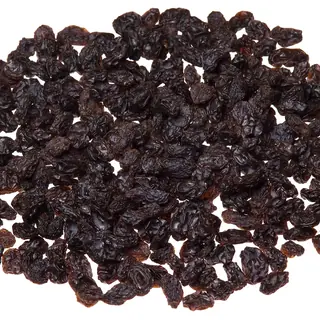
Raisin
1 shared dish
Honey
1 shared dish
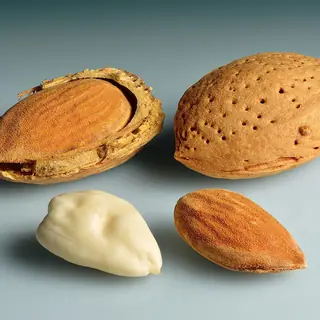
Almond
1 shared dish
Photo credits for this page (5)
Marmalade: Miansari66 · CC0 1.0 · Wikimedia Commons
Chocolate: Mx. Granger · CC0 1.0 · Wikimedia Commons
Almond: Ivar Leidus · CC BY-SA 4.0 · Wikimedia Commons


Around the world
What fig is called
Spanish
higo · Higos
French
figue · figues · figues sèches
Italian
fico
German
Feige
Dutch
vijg
Greek
σύκο
Turkish
İncir
Russian
инжир
Polish
figa
Arabic
تين
Chinese
无花果 · 無花果
Japanese
イチジク · いちじく · 無花果
Show all 43 languages
Aragonese
Figo · Figa
Armenian
թուզ
Asturian
figu · figos · breves
Basque
piku
Brazilian Portuguese
figo
Breton
fiez
Catalan
figa · Figues
Corsican
Ficu
Danish
figen
Egyptian Arabic
تين
Esperanto
Figo
Estonian
Viigimari
Galician
Figo
Interlingua
fico
Irish
fige
Kabyle
Tabexsist
Korean
무화과
Kurdish (Latin)
Hêjîr
Latin
Higo
Latvian
vīģe
Lithuanian
figa · Figos
Moroccan Arabic
كرموص
nah
Hicox
Navajo
Hashkʼaan dijoolí
Norwegian Bokmål
fiken
Norwegian Nynorsk
fiken
Sicilian
Ficu
Slovak
Figa
Slovenian
figa · smokva
Swedish
fikon
Traditional Chinese (Taiwan)
無花果
Ukrainian
інжир
Sources and credits
Data
- GlobeCooks editorial: descriptions, kitchen notes and classification, written by GlobeCooks from checked sources
- USDA FoodData Central (Foundation, SR Legacy): nutrition values (Public domain (US government work, CC0))
- Wikidata: names, classification and dishes (CC0 1.0)
- Wikimedia Commons: photos
- Wikipedia (English) (CC BY-SA 4.0)
Wikidata item: Q2746643
Photos
Photo: BenAveling · CC BY-SA 3.0 · Wikimedia Commons