Veal
Also called calf meat
Veal is a kind of meat. It is an ingredient in 9 dishes in the GlobeCooks catalogue, most of them from Europe and Asia. 100 g raw has about 144 kcal.
- Meat
- Gluten-free
- No listed allergens
About the plain ingredient, not packaged products; general information, not medical advice. Details
- Category
- Meat & poultry
- Cooked most in
- Europe, Asia, The Americas
- Top country
- Russia
- Dishes
- 9 in the catalogue
- Energy
- 144 kcal per 100 g

Photo: Jeff Kubina · CC BY-SA 2.0 · Wikimedia Commons
In the kitchen
How to use veal
Typical ways to cook or use it
- Roast
- Stuff
Preparing it
Veal is often coated before frying.
Cooking with it
Take care during preparation to keep veal from becoming tough.
Nutrition
What 100 g of veal holds
Protein 74%Fat 26%Carbohydrate 0%of the macronutrients by weight
| Energy | 144 kcal · 602 kJ |
|---|---|
| Protein | 19 g |
| Fat | 6.8 g |
| of which saturated | 2.8 g |
| Carbohydrate | 0 g |
| of which sugars | 0 g |
| Sodium | 82 mg |
| Cholesterol | 82 mg |
| Potassium | 315 mg |
|---|---|
| Calcium | 15 mg |
| Iron | 0.83 mg |
| Magnesium | 24 mg |
| Zinc | 3.1 mg |
| Folate | 13 µg |
| Vitamin B12 | 1.3 µg |
Cooked
Protein 59%Fat 20%Carbohydrate 21%of the macronutrients by weight
| Energy | 238 kcal · 994 kJ |
|---|---|
| Protein | 27 g |
| Fat | 9.2 g |
| of which saturated | 3.1 g |
| Carbohydrate | 9.9 g |
| of which sugars | 0.57 g |
| Fibre | 0.3 g |
| Sodium | 454 mg |
| Cholesterol | 112 mg |
| Potassium | 371 mg |
|---|---|
| Calcium | 39 mg |
| Iron | 1.6 mg |
| Magnesium | 31 mg |
| Zinc | 2.8 mg |
| Vitamin A (RAE) | 10 µg |
| Folate | 27 µg |
| Vitamin B12 | 1.2 µg |
Source: USDA FoodData Central (foods 172478, 173815, 173819), public domain. Minerals and vitamins are listed only where USDA measured a non-zero amount.
Around the world
Where veal is cooked
Dishes by continent
On the table
Dishes made with veal
Chashushuli
Georgia
Potjevleesch
Belgium, France
Skoblyanka
Russia
City chicken
United States
Pastırma
Türkiye
Ossobuco
Italy
Stuffed brisket
Sukalki
Dish lists come from Wikidata; a dish counts when its recorded ingredients include veal.
Good to know
Diet and allergens: veal in detail
- Allergens
- None of the 15 listed allergens foundChecked and not found: soy, eggs, fish, milk, lupin, wheat, celery, sesame, mustard, peanuts, molluscs, sulphites, tree nuts, crustaceans, gluten cereals.
- Animal origin
- From: meatChecked and not found: egg, fish, dairy, honey, insect, gelatin, poultry, bone char, shellfish, other animal, animal fining, animal rennet.
- Gluten
- None
- Alcohol
- None
- Caffeine
- None
- Pork
- None
Family
Related forms
- A kind of
- meat
Cooked together
Often cooked with veal
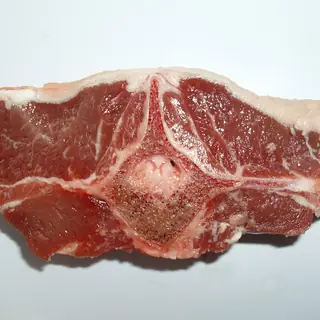
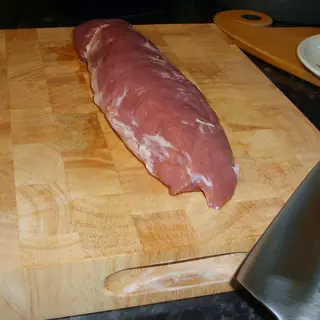
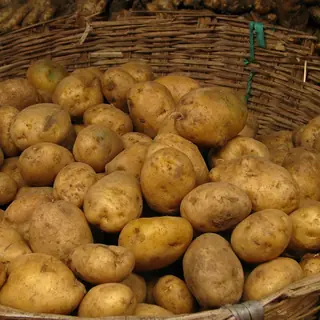

Photo credits for this page (3)
Mutton: Tvabutzku1234 · CC0 1.0 · Wikimedia Commons
Pork: Father.Jack from Coventry, UK · CC BY 2.0 · Wikimedia Commons
Potato: McKay Savage from London, UK · CC BY 2.0 · Wikimedia Commons


Around the world
What veal is called
Spanish
carne de ternera · ternera · carne de vacuno
French
viande de veau · veau (viande)
Italian
vitello · carne di vitello
Portuguese
vitela
German
Kalbfleisch
Dutch
kalfsvlees
Greek
μοσχαρίσιο κρέας
Turkish
dana eti
Russian
телятина
Polish
cielęcina
Arabic
لحم العجل · بتلو
Persian
وییل
Show all 71 languages
Albanian
mish viçi
Amharic
የጥጃ ሥጋ
Armenian
Հորթի միս
Asturian
carne de xata
Bangla
বাছুরের মাংস
Basque
txahalki · txahala
Belarusian (Taraskievica orthography)
цяляціна
Breton
Kig leue
Bulgarian
Телешко месо
Cantonese
牛仔肉
Catalan
carn de vedella
Chinese
小牛肉
Croatian
Teletina
Czech
telecí maso · telecí
Danish
kalvekød · kalv
Egyptian Arabic
بتلو
Esperanto
bovidaĵo
Estonian
vasikaliha
Finnish
vasikanliha
Galician
vitela · tenreira · carne de tenreira · carne de vitela
Georgian
ხბოს ხორცი
Hebrew
בשר עגל · עגל
Hungarian
borjúhús
Icelandic
kálfskjöt
Indonesian
daging sapi muda
Irish
laofheoil
Japanese
仔牛肉
Javanese
Daging sapi enom
Korean
송아지고기
Latin
vitulina
Lithuanian
veršiena
Luxembourgish
Kalleffleesch
Macedonian
телешко
Malay
Daging anak lembu
Malayalam
വീൽ
Maltese
vitella
Manx
feill lheiy
Minangkabau
Dagiang jawi mudo
Navajo
béégashii yáázh bitsįʼ
Norwegian Bokmål
kalvekjøtt
Norwegian Nynorsk
kalvekjøt · kalvekjøtt
Punjabi
ਵੀਲ
Romanian
carne de vițel
Samogitian
Veršė̄na
Scottish Gaelic
feòil-laoigh
Serbian
телетина
Serbian (Cyrillic)
телетина
Serbian (Latin)
телетина
Serbian (Latin)
teletina
Slovak
teľacie mäso
Slovenian
teletina · telečje meso
Swedish
kalvkött
Thai
เนื้อลูกวัว
Ukrainian
телятина
Uzbek
Veal
Venetian
vedeło
Vietnamese
Thịt bê
Volapük
bubülamit
Welsh
cig llo
Western Frisian
keallefleis
Zaza
Goştê golıki
Sources and credits
Data
- GlobeCooks editorial: descriptions, kitchen notes and classification, written by GlobeCooks from checked sources
- USDA FoodData Central (Foundation, SR Legacy): nutrition values (Public domain (US government work, CC0))
- Wikidata: names, classification and dishes (CC0 1.0)
- Wikimedia Commons: photos
Wikidata item: Q957434
Photos
Photo: Jeff Kubina · CC BY-SA 2.0 · Wikimedia Commons