Pork ribs
Pork ribs are meat that includes bone and muscle. Cooks bake, grill, smoke, or steam them and pair them with barbecue sauce.
- Meat
- Gluten-free
- No listed allergens
- Pork
About the plain ingredient, not packaged products; general information, not medical advice. Details
- Category
- Meat & poultry
- Part used
- Bone, muscle
- Cooked most in
- Europe
- Top country
- Portugal
- Dishes
- 3 in the catalogue
- Energy
- 224 kcal per 100 g

Photo: Gunawan Kartapranata · CC BY-SA 3.0 · Wikimedia Commons
In the kitchen
How to use pork ribs
Typical ways to cook or use it
- Bake
- Grill
- Smoke
- Steam
Preparing it
Remove the connective tissue from the inside of the rib cage before marinating or cooking; it is hard to tenderize.
Goes well with
- barbecue sauce
Nutrition
What 100 g of pork ribs holds
Protein 54%Fat 46%Carbohydrate 0%of the macronutrients by weight
| Energy | 224 kcal · 936 kJ |
|---|---|
| Protein | 19 g |
| Fat | 16 g |
| of which saturated | 5.8 g |
| Carbohydrate | 0 g |
| of which sugars | 0 g |
| Fibre | 0 g |
| Sodium | 87 mg |
| Cholesterol | 69 mg |
| Potassium | 247 mg |
|---|---|
| Calcium | 31 mg |
| Iron | 0.76 mg |
| Magnesium | 16 mg |
| Zinc | 2.5 mg |
| Vitamin A (RAE) | 7 µg |
| Vitamin B12 | 0.56 µg |
Source: USDA FoodData Central (food 168299), public domain. Minerals and vitamins are listed only where USDA measured a non-zero amount.
Around the world
Where pork ribs is cooked
Dishes by continent
Countries whose dishes use it most
Counts are catalogued dishes from each country that list pork ribs among their ingredients.
On the table
Dishes made with pork ribs
Arròs al forn
Spain
Sorrel soup
Eastern Europe
Migas alentejanas
Portugal
Dish lists come from Wikidata; a dish counts when its recorded ingredients include pork ribs.
Good to know
Diet and allergens: pork ribs in detail
- Allergens
- None of the 15 listed allergens foundChecked and not found: soy, eggs, fish, milk, lupin, wheat, celery, sesame, mustard, peanuts, molluscs, sulphites, tree nuts, crustaceans, gluten cereals.
- Animal origin
- From: meatChecked and not found: egg, fish, dairy, honey, insect, gelatin, poultry, bone char, shellfish, other animal, animal fining, animal rennet.
- Gluten
- None
- Alcohol
- None
- Caffeine
- None
- Pork
- Contains
Family
Related forms
- A kind of
- pork
Cooked together
Often cooked with pork ribs
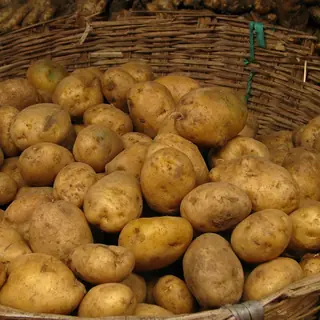

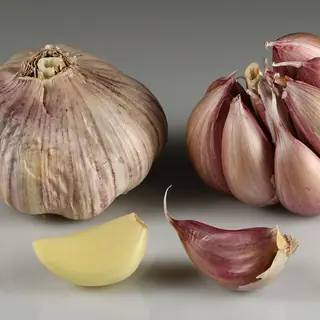

Photo credits for this page (3)
Potato: McKay Savage from London, UK · CC BY 2.0 · Wikimedia Commons
Water: Forbes Johnston from Winchester, UK · CC BY 2.0 · Wikimedia Commons
Garlic: Ivar Leidus · CC BY-SA 4.0 · Wikimedia Commons


Around the world
What pork ribs is called
Spanish
costillas de cerdo · costilla de cerdo
French
travers de porc
Portuguese
Flæskesteg
Russian
Корейка
Hebrew
צלעות חזיר
Chinese
排骨 · 豬排骨 · 豬肋骨 · 豬肋
Japanese
排骨 · 排骨飯 · パイコー · 排骨麺
Korean
돼지 갈비
Vietnamese
Sườn nướng
Indonesian
Iga babi
Aragonese
Costiellas de tocín
Basque
txerri saihets · txerri saiheski
Show all 24 languages
Cantonese
豬扒
Danish
Flæskesteg
Egyptian Arabic
اضلاع لحم الخنزير
Esperanto
porkripaĵo
Finnish
Ribbe
Igbo
Àgárá anụ ézì
Javanese
Iga babi
Northern Frisian
Rabstak
Norwegian Bokmål
Svineribbe
Norwegian Nynorsk
Ribbe · Svineribbe
Simplified Chinese
排骨 · 蒜香排骨
Simplified Chinese (China)
排骨
Swedish
revbensspjäll
Traditional Chinese
排骨
Traditional Chinese (Hong Kong SAR China)
排骨
Traditional Chinese (Taiwan)
排骨
Ukrainian
Свінеріббе
Sources and credits
Data
- GlobeCooks editorial: descriptions, kitchen notes and classification, written by GlobeCooks from checked sources
- USDA FoodData Central (Foundation, SR Legacy): nutrition values (Public domain (US government work, CC0))
- Wikidata: names, classification and dishes (CC0 1.0)
- Wikimedia Commons: photos
Wikidata item: Q1526944
Photos
Photo: Gunawan Kartapranata · CC BY-SA 3.0 · Wikimedia Commons