Oregano
Origanum vulgare
Oregano is an herb used for its leaves. Cooks use it for seasoning, infusing, and garnishing, and pair it with lamb, mutton, and fish.
- Plant-based
- Gluten-free
- No listed allergens
About the plain ingredient, not packaged products; general information, not medical advice. Details
- Category
- Herbs & spices
- Part used
- Leaf
- Family
- Lamiaceae
- Cooked most in
- Europe
- Top country
- Italy
- Dishes
- 4 in the catalogue
- Energy
- 265 kcal per 100 g

Photo: Henna · CC BY-SA 1.0 · Wikimedia Commons
In the kitchen
How to use oregano
Nutrition
What 100 g of oregano holds
Protein 11%Fat 5%Carbohydrate 84%of the macronutrients by weight
| Energy | 265 kcal · 1,107 kJ |
|---|---|
| Protein | 9 g |
| Fat | 4.3 g |
| of which saturated | 1.6 g |
| Carbohydrate | 69 g |
| of which sugars | 4.1 g |
| Fibre | 43 g |
| Sodium | 25 mg |
| Cholesterol | 0 mg |
| Potassium | 1,260 mg |
|---|---|
| Calcium | 1,597 mg |
| Iron | 37 mg |
| Magnesium | 270 mg |
| Zinc | 2.7 mg |
| Vitamin C | 2.3 mg |
| Vitamin A (RAE) | 85 µg |
| Folate | 237 µg |
Source: USDA FoodData Central (food 171328), public domain. Minerals and vitamins are listed only where USDA measured a non-zero amount.
Around the world
Where oregano is cooked
On the table
Dishes made with oregano
Fenkata
Malta
Sardenaira
Italy
Lomo en adobo
Zanahorias aliñadas
Dish lists come from Wikidata; a dish counts when its recorded ingredients include oregano.
Good to know
Diet and allergens: oregano in detail
- Allergens
- None of the 15 listed allergens foundChecked and not found: soy, eggs, fish, milk, lupin, wheat, celery, sesame, mustard, peanuts, molluscs, sulphites, tree nuts, crustaceans, gluten cereals.
- Animal origin
- No animal ingredients foundChecked and not found: egg, fish, meat, dairy, honey, insect, gelatin, poultry, bone char, shellfish, other animal, animal fining, animal rennet.
- Gluten
- None
- Alcohol
- None
- Caffeine
- None
- Pork
- None
Cooked together
Often cooked with oregano
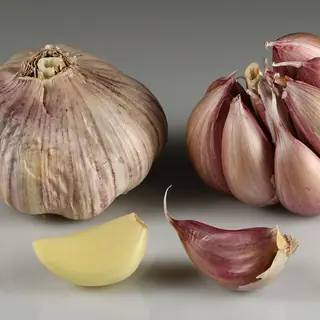

Photo credits for this page (1)
Garlic: Ivar Leidus · CC BY-SA 4.0 · Wikimedia Commons

Around the world
What oregano is called
Spanish
orégano
French
origan
Italian
origano
Portuguese
orégãos
German
Oregano
Dutch
oregano
Greek
ρίξανη
Russian
орегано
Polish
oregano
Hebrew
אורגנו
Basque
oregano
Bulgarian
риган
Show all 26 languages
Catalan
orenga · herba musca · roca morera
Cebuano
Oregano
Czech
oregano
Danish
oregano
Estonian
pune · oregaano
Finnish
oregano
Hungarian
oregánó · szurokfű
Latvian
raudene
Lithuanian
raudonėlis
Norwegian Bokmål
oregano
Norwegian Nynorsk
oregano · Oregano
Romanian
oregano
Slovenian
origano
Swedish
oregano
Sources and credits
Data
- GlobeCooks editorial: descriptions, kitchen notes and classification, written by GlobeCooks from checked sources
- USDA FoodData Central (Foundation, SR Legacy): nutrition values (Public domain (US government work, CC0))
- Wikidata: names, classification and dishes (CC0 1.0)
- Wikimedia Commons: photos
Wikidata item: Q92581152
Photos
Photo: Henna · CC BY-SA 1.0 · Wikimedia Commons