Garlic chives
Allium tuberosumAlso called kutsay, Chinese chives and allium tuberosum
Garlic chives are an herb used for their buds, leaves, and stems. Cooks ferment, pickle, shallow-fry, or stir-fry them, and use them for seasoning. They pair with egg, shrimp, and pork.
- Plant-based
- Gluten-free
- No listed allergens
About the plain ingredient, not packaged products; general information, not medical advice. Details
- Category
- Herbs & spices
- Part used
- Bud, leaf, stem
- Family
- Amaryllidaceae
- Cooked most in
- Asia
- Top country
- Indonesia
- Dishes
- 5 in the catalogue

Photo: Fumikas Sagisavas · CC0 1.0 · Wikimedia Commons
In the kitchen
How to use garlic chives
Around the world
Where garlic chives is cooked
Dishes by continent
- Asia5
Countries whose dishes use it most
Counts are catalogued dishes from each country that list garlic chives among their ingredients.
On the table
Dishes made with garlic chives
Rice lengko
Indonesia
Rebanira itame
Japan
Soto Jepara
Indonesia
I know
Indonesia
Dish lists come from Wikidata; a dish counts when its recorded ingredients include garlic chives.
Good to know
Diet and allergens: garlic chives in detail
- Allergens
- None of the 15 listed allergens foundChecked and not found: soy, eggs, fish, milk, lupin, wheat, celery, sesame, mustard, peanuts, molluscs, sulphites, tree nuts, crustaceans, gluten cereals.
- Animal origin
- No animal ingredients foundChecked and not found: egg, fish, meat, dairy, honey, insect, gelatin, poultry, bone char, shellfish, other animal, animal fining, animal rennet.
- Gluten
- None
- Alcohol
- None
- Caffeine
- None
- Pork
- None
Cooked together
Often cooked with garlic chives
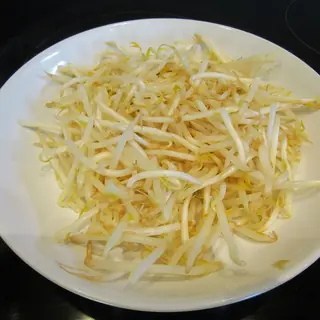
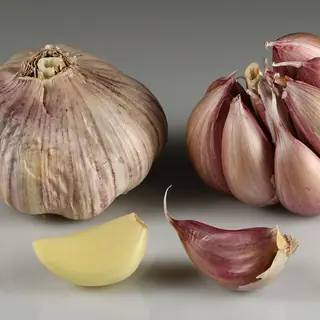

Photo credits for this page (2)
Mung bean sprout: Kolforn · CC BY-SA 4.0 · Wikimedia Commons
Garlic: Ivar Leidus · CC BY-SA 4.0 · Wikimedia Commons


Around the world
What garlic chives is called
Spanish
Allium tuberosum · cuchay
French
Ciboule de Chine · Allium tuberosum
Italian
Allium tuberosum
Portuguese
Allium tuberosum · Allium ramosum · Cebolinho chinês
German
Allium tuberosum · Knoblauch-Schnittlauch
Dutch
Chinese bieslook · Allium tuberosum
Russian
Лук клубневой · Allium odorum · Лук пахучий · Джусай
Polish
Allium tuberosum · Czosnek bulwiasty
Arabic
إليوم توبروسيوم
Bangla
চিভ
Urdu
ثوم دَرَنیہ · Garlic chives · ثوم درنیہ · Allium tuberosum
Chinese
韭菜 · 韭 · 韭子 · 薤白
Show all 60 languages
Albanian
Allium tuberosum
Aragonese
Allium tuberosum
Asturian
Allium tuberosum
Banjar
Kucai
Basque
Allium tuberosum
Belarusian
Allium tuberosum
Brazilian Portuguese
Allium tuberosum
Bulgarian
Allium tuberosum
Cantonese
韮菜
Catalan
cibulet de la Xina
Cebuano
Allium tuberosum
Central Dusun
Losun
Czech
česnek hlíznatý
Egyptian Arabic
اليوم توبروسيوم
Esperanto
Ĉina ajlo
Extremaduran
Allium tuberosum
Filipino
kutsay
Finnish
kiinansipuli · Allium tuberosum
Galician
Allium tuberosum
Gorontalo
Kucai
Icelandic
Allium tuberosum
Ido
Allium tuberosum
Indonesian
Kucai · Bawang kucai · Daun kucai
Interlingua
Allium tuberosum
Interlingue
Allium tuberosum
Irish
Allium tuberosum
Japanese
ニラ · にら · 韮 · キュウシ
Javanese
Kucai
Korean
부추 · 정구지
Latin
Allium tuberosum
Literary Chinese
韭
Macedonian
кинески власец
Malay
Kucai
Manchu
ᠰᡝᠩᡴᡠᠯᡝ
Min Nan Chinese
Kú-chhài
Norwegian Bokmål
kinaløk
Occitan
Allium tuberosum
Pampanga
Kuse
Romanian
Allium tuberosum
Simplified Chinese
韭菜
Simplified Chinese (China)
韭菜
Sundanese
Kucay
Swedish
Kinesisk gräslök · Allium tuberosum
Thai
กุยช่าย · กุ้ยช่าย
Traditional Chinese
韭菜
Traditional Chinese (Taiwan)
韭菜
Ukrainian
Allium tuberosum
Uyghur
كۈدە
Venetian
ajo cineze · àgio cineze
Vietnamese
Hẹ · Allium ramosum · Allium odorum · Cửu thái tử
Volapük
Allium tuberosum
Waray
Allium tuberosum
Zhuang
Byaekgep
Sources and credits
Data
- GlobeCooks editorial: descriptions, kitchen notes and classification, written by GlobeCooks from checked sources
- Wikidata: names, classification and dishes (CC0 1.0)
- Wikimedia Commons: photos
- Wikipedia (English) (CC BY-SA 4.0)
Wikidata item: Q42285
Photos
Photo: Fumikas Sagisavas · CC0 1.0 · Wikimedia Commons