Goji
Also called wolfberry
Goji is a fruit that is tender when raw. It is sold dried and used to garnish and sweeten dishes.
- Plant-based
About the plain ingredient, not packaged products; general information, not medical advice. Details
- Category
- Fruit
- Part used
- Fruit
- Family
- Solanaceae
- Texture
- Tender
- Cooked most in
- Asia
- Top country
- China
- Dishes
- 1 in the catalogue
- Energy
- 349 kcal per 100 g

Photo: Pvt pauline · CC BY-SA 3.0 · Wikimedia Commons
In the kitchen
How to use goji
Typical ways to cook or use it
- Garnish
- Sweeten
Flavour
Taste and texture
Texture, raw
- Tender
Shopping
Choosing and storing goji
- Sold as
- Dried
Nutrition
What 100 g of goji holds
Protein 16%Fat 0%Carbohydrate 84%of the macronutrients by weight
| Energy | 349 kcal · 1,461 kJ |
|---|---|
| Protein | 14 g |
| Fat | 0.39 g |
| of which saturated | 0 g |
| Carbohydrate | 77 g |
| of which sugars | 46 g |
| Fibre | 13 g |
| Sodium | 298 mg |
| Cholesterol | 0 mg |
| Calcium | 190 mg |
|---|---|
| Iron | 6.8 mg |
| Vitamin C | 48 mg |
Source: USDA FoodData Central (food 173032), public domain. Minerals and vitamins are listed only where USDA measured a non-zero amount.
Around the world
Where goji is cooked
Dishes by continent
- Asia1
Countries whose dishes use it most
Counts are catalogued dishes from each country that list goji among their ingredients.
Origins
- Native to
- Eastern Asia
The 2000s · Canada and United States
Commercial goji cultivation began in Canada and the United States.
On the table
Dishes made with goji
Osmanthus cake
China
Dish lists come from Wikidata; a dish counts when its recorded ingredients include goji.
Good to know
Diet and allergens: goji in detail
- Allergens
- None of the 15 listed allergens foundChecked and not found: eggs, fish, milk, molluscs, sulphites, crustaceans.
- Animal origin
- No animal ingredients foundChecked and not found: egg, fish, meat, dairy, honey, insect, gelatin, poultry, bone char, shellfish, other animal, animal fining, animal rennet.
- Alcohol
- None
- Pork
- None
Cooked together
Often cooked with goji
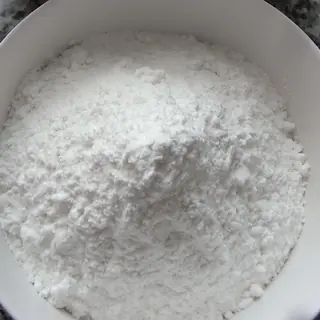

Photo credits for this page (1)
Glutinous rice flour: Ocomejessian · CC BY-SA 3.0 · Wikimedia Commons

Around the world
What goji is called
Spanish
lycium barbarum
French
baie de goji · goji
Italian
bacche di goji · goji
Portuguese
Goji
German
Gemeiner Bocksdorn
Dutch
goji-bes · goji-bessen · gojibessen · goji
Greek
γκότζι μπέρυ
Russian
дереза · Годжи
Polish
Goji · Jagody Goji · Lycium barbarum · Kolcowój szkarłatny
Arabic
توت القوجي
Persian
گوجیبری
Tamil
goji
Show all 43 languages
Albanian
Goji
Basque
hesilahar
Belarusian (Taraskievica orthography)
годжы · ягады годжы
Catalan
goji · baies tibetanes · baia de Goji · baies de Goji
cdo
Gēu-gī
Chinese
枸杞 · 枸杞子
Corsican
Baghi di liciu
Czech
godži
Egyptian Arabic
جوجى
Esperanto
gojio
Finnish
gojimarja · goji-marja · susimarja
Galician
Goxi
Georgian
გოჯი ბერი
Hungarian
Goji bogyó
Indonesian
Gojiberi
Irish
Lycium barbarum
Japanese
クコ · クコの実 · 枸杞 · ゴジベリー
Javanese
Goji beri
Korean
구기자
Macedonian
гоџи · гоуџји
Malay
Goji
Romanian
Cătină de garduri
Serbian
Гоџи
Simplified Chinese
枸杞
Simplified Chinese (China)
枸杞
Sindhi
گوندي
Slovak
Kou-čchi
Slovenian
godži · goji
Swedish
Gojibär
Telugu
గోజీ
Traditional Chinese
枸杞
Uzbek
Goji
Vietnamese
kỷ tử
Zhuang
Gaeujgij
Sources and credits
Data
- GlobeCooks editorial: descriptions, kitchen notes and classification, written by GlobeCooks from checked sources
- USDA FoodData Central (Foundation, SR Legacy): nutrition values (Public domain (US government work, CC0))
- Wikidata: names, classification and dishes (CC0 1.0)
- Wikimedia Commons: photos
- Wikipedia (English) (CC BY-SA 4.0)
Wikidata item: Q2617260
Photos
Photo: Pvt pauline · CC BY-SA 3.0 · Wikimedia Commons