Beet
Beta vulgaris, Beta vulgaris subsp. vulgaris Conditiva GroupAlso called beta and Beta (Chenopodiaceae)
Beet is a vegetable whose roots and leaves are eaten. Cooks bake, boil, simmer, pickle, or steam it.
- Plant-based
- Gluten-free
- No listed allergens
About the plain ingredient, not packaged products; general information, not medical advice. Details
- Category
- Vegetables
- Part used
- Leaf, root
- Family
- Amaranthaceae
- Cooked most in
- Europe
- Top country
- Spain
- Dishes
- 6 in the catalogue
- Energy
- 45 kcal per 100 g

Photo: W.carter · CC BY-SA 4.0 · Wikimedia Commons
In the kitchen
How to use beet
Typical ways to cook or use it
- Bake
- Boil simmer
- Pickle
- Steam
Nutrition
What 100 g of beet holds
Protein 16%Fat 3%Carbohydrate 82%of the macronutrients by weight
| Energy | 45 kcal · 180 kJ |
|---|---|
| Protein | 1.7 g |
| Fat | 0.3 g |
| of which saturated | 0.03 g |
| Carbohydrate | 8.8 g |
| of which sugars | 5.1 g |
| Fibre | 3.1 g |
| Sodium | 112 mg |
| Cholesterol | 0 mg |
| Potassium | 342 mg |
|---|---|
| Calcium | 14 mg |
| Iron | 0.43 mg |
| Magnesium | 21 mg |
| Zinc | 0.31 mg |
| Vitamin C | 4.6 mg |
| Vitamin A (RAE) | 2 µg |
| Folate | 103 µg |
Source: USDA FoodData Central (foods 169145, 2685576), public domain. Minerals and vitamins are listed only where USDA measured a non-zero amount.
Around the world
Where beet is cooked
On the table
Dishes made with beet
Dressed herring
Cold borscht
Hormigo
Spain
Botvinia
Cold borscht
Ćwikła
Dish lists come from Wikidata; a dish counts when its recorded ingredients include beet.
Good to know
Diet and allergens: beet in detail
- Allergens
- None of the 15 listed allergens foundChecked and not found: soy, eggs, fish, milk, lupin, wheat, celery, sesame, mustard, peanuts, molluscs, sulphites, tree nuts, crustaceans, gluten cereals.
- Animal origin
- No animal ingredients foundChecked and not found: egg, fish, meat, dairy, honey, insect, gelatin, poultry, bone char, shellfish, other animal, animal fining, animal rennet.
- Gluten
- None
- Alcohol
- None
- Caffeine
- None
- Pork
- None
Cooked together
Often cooked with beet
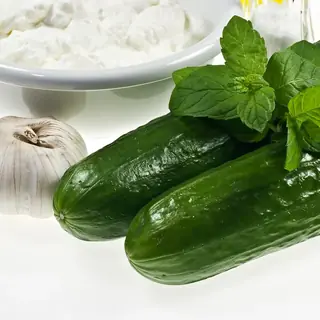

Photo credits for this page (1)
Cucumber: Nikodem Nijaki · CC BY-SA 3.0 · Wikimedia Commons

Around the world
What beet is called
Spanish
remolacha
French
betterave
Italian
barbabietola
Portuguese
beterraba
German
Rote Bete
Dutch
rode biet
Russian
свёкла · свекла · свекольный лист · свекольная ботва
Polish
burak ćwikłowy · burak · korzeń buraka · liście buraka
Arabic
شمندر أحمر
Chinese
紅菜頭
Japanese
ビート · ビーツ · ビーツの葉 · ビーツ・グリーン
Thai
บีตรูต
Show all 43 languages
Amharic
ቀይስር
Armenian
ճակնդեղ
Belarusian
бурак · бурак (караняплод) · бураковае бацвінне · бураковае лісце
Catalan
bleda-rave · ravebleda · remolatxa · fulles de remolatxa
Cornish
betysen
Czech
červená řepa
Egyptian Arabic
شمندر احمر
Estonian
peet
Finnish
punajuuri · punajuurikas
Galician
remolacha de horta
Hungarian
cékla
Irish
beetroot
Kyrgyz
кызылча
Lithuanian
burokėliai
Malay
ubi bit merah
Maltese
pitravi
Mongolian
хүрэн манжин
Norwegian Bokmål
rødbete
Picard
biétrape
Romanian
sfeclă
Samogitian
svėklis
Sanskrit
पालङ्कः
Santali
ᱥᱚᱞᱜᱚᱢ
Serbian
цвекла
Slovak
červená repa
Slovenian
rdeča pesa · pesini listi
Southern Sotho
beterute
Swedish
rödbeta · beta
Tuvinian
свёкла
Ukrainian
буряк · буряк (коренеплід)
Vietnamese
củ dền
Sources and credits
Data
- GlobeCooks editorial: descriptions, kitchen notes and classification, written by GlobeCooks from checked sources
- USDA FoodData Central (Foundation, SR Legacy): nutrition values (Public domain (US government work, CC0))
- Wikidata: names, classification and dishes (CC0 1.0)
- Wikimedia Commons: photos
Wikidata item: Q99548274
Photos
Photo: W.carter · CC BY-SA 4.0 · Wikimedia Commons